
If you’re reading this, you’re probably on the fence about SEO. Maybe someone told you to invest in it. Maybe you’ve tried paid ads and you’re wondering if there’s a better way. Or maybe you just want to understand whether SEO is actually worth your time and money.
I’m not going to give you a textbook answer. I’ve worked hands-on with SEO, doing keyword research, writing content, building backlinks, and running audits, and I’ve seen what works, what doesn’t, and what most businesses get completely wrong from the start.
Let’s get into it.
What SEO Actually Is (In Plain Terms)
SEO stands for Search Engine Optimization. It’s the process of making your website visible on Google when people search for something related to your business without paying for every click.
When someone types “best accounting software for small business” or “SEO agency in Pakistan,” Google decides which websites to show and in what order. SEO is the work that determines whether your website shows up or not.
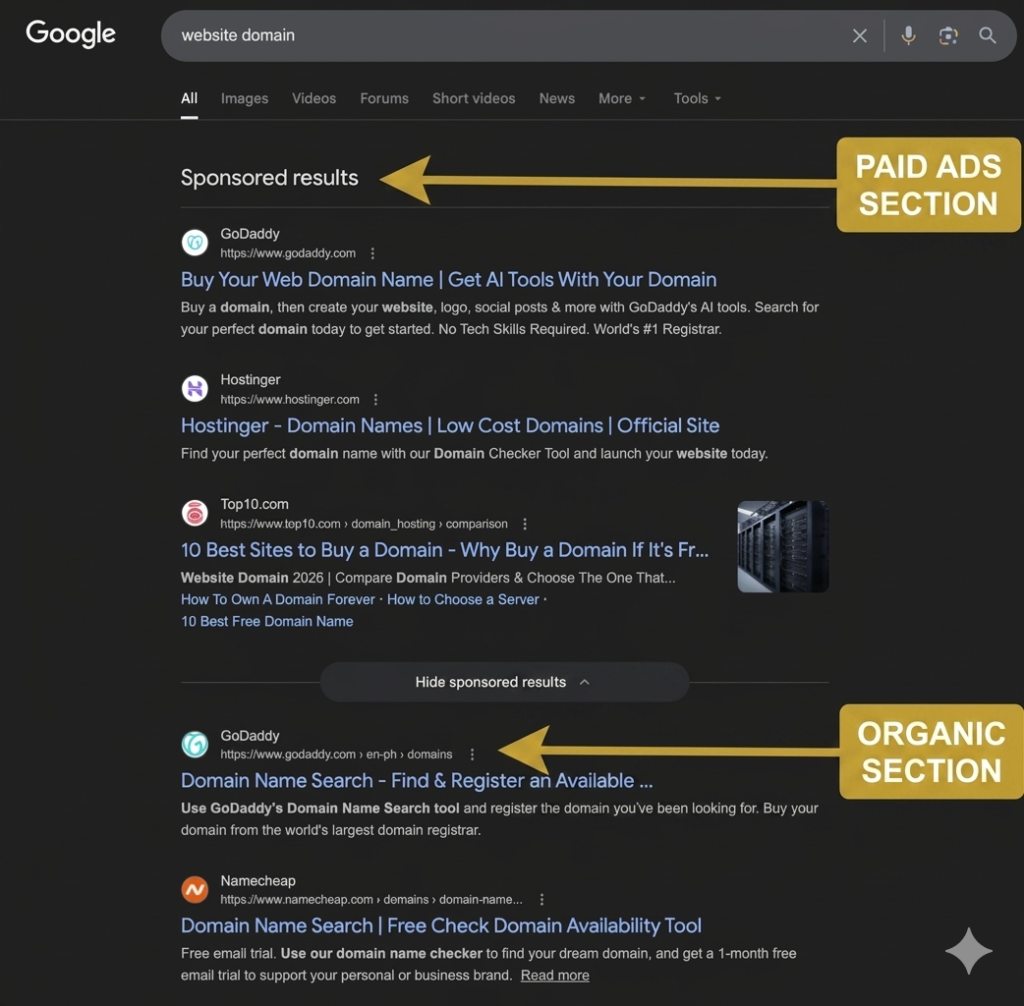
Unlike paid ads, you don’t pay Google every time someone clicks. You earn that visibility.
SEO vs Paid Ads: The Honest Comparison
This is the question I get most often: “Why not just run ads?”
Here’s my honest answer: ads work, but they stop the moment you stop paying. The visibility is rented. SEO takes longer, but the results compound over time. Once your content ranks, it can bring traffic for months or years without ongoing spend.
| SEO | Paid Ads | |
|---|---|---|
| Cost | Time and effort upfront | Ongoing budget required |
| Timeline | 3–6+ months to see results | Immediate |
| Visibility | Long-term | Stops when budget stops |
| Trust | Higher — organic results feel more credible | Lower — users know it’s an ad |
| Best for | Long-term growth and brand authority | Short-term campaigns and quick wins |
If you’re still weighing your options, I’ve written a detailed breakdown on whether you should do SEO yourself or hire an agency.
What I Learned From a Real SEO Project
I worked on the website of a software company that was only ranking for its own brand name on Google. Nobody was finding them through organic search unless they already knew the company existed.
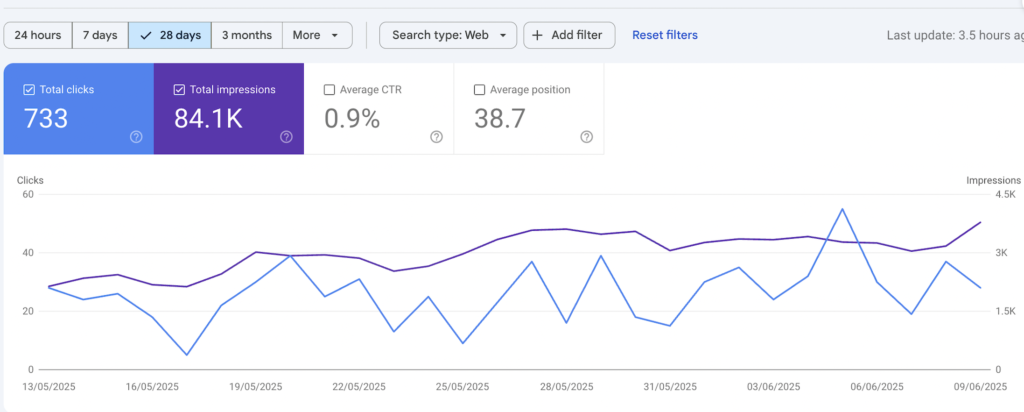
We built an SEO strategy around targeted blog content, keyword research, and backlink building. Within roughly three months, the results were significant:
- 162,000 impressions in 6 months
- 84,000 impressions in a single month
- Around 70% of target keywords started ranking
The CEO was pleased until they asked the question that changed how I think about SEO forever:
“Traffic is coming. Where are the clients?”
And that question stopped me in my tracks. Because they were right. People were landing on the website. But very few were converting. The emails coming in were mostly guest post requests, not business inquiries.
Here’s what I realized: SEO brings people to your door. Your website has to invite them in.
The website wasn’t structured to guide a visitor anywhere. There was no clear flow from landing on a page to understanding the service to reaching out. A reader would arrive, read, and leave with no natural next step pulling them toward the contact page.
This is something most SEO blogs won’t tell you: traffic without a conversion strategy is an incomplete investment. Before you focus on rankings, make sure your website is structured in a way that moves a reader from one section to the next, naturally leading them toward taking action. Think of it like a conversation, each paragraph should make the next one feel necessary, until the reader reaches out.
This is also why I wrote about whether SEO services are actually worth it because the answer depends heavily on whether your website is ready to convert.
Why SEO Is Important for Business: The Real Reasons
1. It Puts You in Front of People Who Are Already Looking
The biggest difference between SEO and most other marketing is intent. Someone searching “SEO services for my business” is not passively scrolling; they are actively looking for a solution. SEO puts you in front of that person at exactly the right moment.
Paid ads can do this too, but organic results carry more trust. Most users know when something is an ad. Ranking organically signals credibility.
2. It Builds Long-Term Visibility
A blog post that ranks today can bring traffic six months from now without any additional work. That’s not how ads work. SEO is slow to start but it compounds, each piece of content you publish adds to the foundation.
3. It’s a Signal of Authority in Your Industry
When your website consistently appears on the first page for topics related to your business, it builds trust, not just with Google, but with the people searching. A business that ranks for relevant terms is perceived as more established and credible than one that doesn’t appear at all.
4. It Gives You Data to Make Better Business Decisions
SEO tools like Google Search Console show you exactly what people are searching for when they find you, how many see your page, and how many click. This data is genuinely useful beyond SEO; it tells you what your audience actually wants, which can inform your products, services, and messaging.
The Mistake Most Businesses Make With SEO
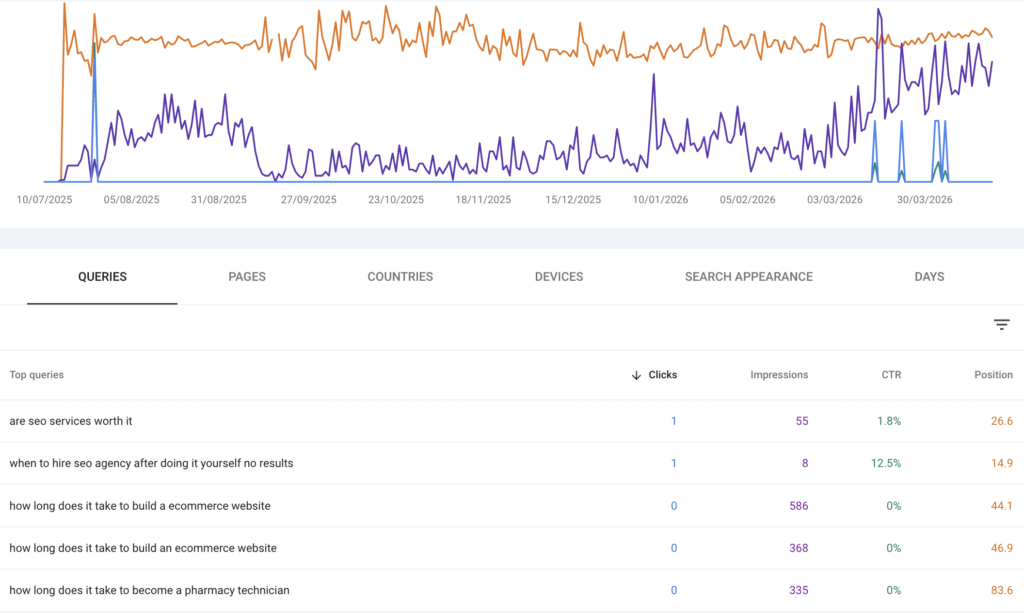
Beyond the conversion problem I mentioned, there’s another mistake I’ve seen repeatedly: chasing the wrong keywords.
Early in my SEO work, I learned that one backlink from a relevant, authoritative website is worth more than fifty links from random, low-quality sites. The same principle applies to keywords. Targeting a keyword that has nothing to do with your website or business just because it has high search volume wastes time and rarely produces results.
The businesses that get the most from SEO are the ones that stay focused: relevant keywords, relevant content, relevant links. Simple, but most people skip it.
If you’re wondering whether SEO actually works or is overhyped, I covered that in detail here: Does SEO Really Work?.
So Should Your Business Invest in SEO?
Here’s my honest answer:
Yes, if you’re thinking long term.
If you need clients next week, SEO is not the right tool for that. Use ads for immediate visibility.
But if you’re building something that needs to grow over the next 12, 24, 36 months, SEO is one of the highest-return investments you can make. The traffic it generates is free, it’s intent-based, and it doesn’t disappear the moment your budget runs out.
Just go in with realistic expectations:
- Results take time; typically 3 to 6 months minimum
- Traffic alone is not the goal, your website needs to convert that traffic
- Quality beats quantity; in content, in keywords, in backlinks
- Consistency matters more than volume; one good blog per week beats five average ones
Final Thought
SEO changed how I think about digital marketing entirely. It’s not a shortcut. It’s not magic. It’s a system, and when it’s built correctly, with the right strategy and a website that’s actually designed to convert, it works.
The businesses that win with SEO are not necessarily the ones with the biggest budgets. They’re the ones that stay consistent, stay relevant, and understand that the goal was never just traffic, it was growth.
Frequently Asked Questions
Q: How long does SEO take to show results?
Typically 3 to 6 months before you see meaningful movement, though some pages can rank faster depending on competition and keyword difficulty. The compounding effect kicks in after consistent effort over time.
Q: Is SEO worth it for small businesses?
Yes , arguably more so than for large businesses. Small businesses can target specific, low-competition keywords in their niche and start ranking faster than trying to compete on broad terms. The cost is mostly time, not budget.
Q: What is the difference between SEO and paid ads?
Paid ads give you immediate visibility but stop the moment your budget does. SEO takes longer to build but generates free, ongoing traffic once you rank. For long-term growth, SEO is more cost-effective.
Q: Can I do SEO myself or do I need to hire someone?
Basics like keyword research, blog writing, and on-page optimization are learnable and doable yourself. Technical SEO and link building are harder and usually benefit from professional help. It depends on your time, budget, and how fast you want to grow.
Q: Why is my website getting traffic but no clients?
Traffic without conversion strategy is a common problem. SEO brings visitors to your site — but your website’s structure, copywriting, and calls to action determine whether those visitors become clients. If there’s no clear path guiding a reader toward contacting you, they will leave without acting.
Q: Does SEO work for all types of businesses?
SEO works for most businesses, but the timeline and approach differ. Service businesses, e-commerce stores, SaaS companies, and local businesses all benefit — but the keyword strategy, content type, and link-building approach will look different for each.
Leave a Reply